Jim Groom, edtech guru, has been conducting interviews about writing at ReclaimTV. Many of the guests have been blogging for decades, and are very familiar to me from my years teaching at a distance, such as Bryan Alexander and Audrey Watters.
One of the most interesting interviews was Kate Bowles, who hasn’t blogged for years but influenced all of us when she did and now posts on Mastadon. In a broad ranging conversation, she discussed her own public writing, including her efforts to get back into it. She and Jim talked about how things have changed, the conversations that no longer take place on blogs, the echo chambers created by closed communities, and what survives with the prevalence of AI.
I am late to the term “fediverse”, and the more I learn about this idea of global, open, interconnected and independent sharing, the more it sounds like the World Wide Web when it was the Wild West. I wrote about that open web, and worried about losing it, in 2011 and 2012. Free, open, share — these are words from the late 1990s and early 2000s, when I became an online educator and participant.
Historians, of course, look backward all the time. The web became closed in the same way as the American frontier, through privileging commercialism and private gain. As we talk about writing publicly, we tend to want to go back to when blogging was long-form communication with call-and-response, a way to thoroughly hash through various subjects by learning about various viewponts, and writing about them. We groan about how this world has been taken over by places that are either closed (Discord) or plagued with bad actors and focused on selling things (Facebook, Instagram, X).
Taking a broader cultural perspective on the present, above and beyond the complaints of writers themselves, doesn’t help. We see long-form writing in general going out of fashion (just ask those of us who write and try to sell our novels), AI normalizing bad bland prose, and a strong desire for less junk and more meaning.
Perhaps it is best to celebrate the fact that intellectual and poetic writing is vintage. Many of the objects I value, such as record albums and landline phones, were once popular forms but are now niche. Blogging, and indeed long-form writing in general, may occupy such a place historically. We mourn this and rage, because without long-form writing it is impossible to posit a convincing argument, present evidence of an outlandish thesis, or tell a full and meaningful story.
It doesn’t really matter where we do it, and if the fediverse* is the place for it, I’m in.
(*NB: for the record, I think that term is awful – I much prefer open web)
As if regular old political news weren’t bad enough, we must make connections between the behemoths of technology and the decline of enthusiasm for web-based educational technology and online learning in general. The conclusions are not inspiring.
As you know if you read my blog, I essentially gave up on web-based apps for my students a couple of years ago, and have moved all my class activity to the Canvas system or a Canvas-based LTI within that system (with the exception of one Honors blog).
As the author of Insidious Pedagogy, this has been a painful, soul-searching path leading to closing my classes. Since the beginnings (I started teaching online in 1998), I have encouraged faculty to put their pedagogy first, to find ways to force the technologies to do what you want. As an early fan of pedagogies that emphasize constructivism and connectivism, I have experimented with many formats (contract grading, connectivist learning, open blogging). If you’ve heard of Ning, Glogster, Dellicious, Blip,tv, Blabberize, Elgg, Eyejot, GoAnimate, Lingr, Mind42, MyPlick, Overstream, Plotagon, Plupper, Screenr, Slideshare, Trialmeme, and Posterous, you have some idea of what I’ve tried.
My college went over to Canvas in the wave of California Community Colleges who’d been made an offer we couldn’t refuse. As California began to standardize its online college education, mass media began to cover the concerns I’d had all along about student privacy and exposure in online environments. I no longer had any arguments to answer those who objected to students working on the open web, even as the web was closing.
So whatever else Facebook and Google have done (and none of it struck me as exceptional or unusual), they have underlined my concerns about students working openly, and undermined public confidence in living portions of our lives on the web. We were so concerned about not being sold by Learning Management Systems that we were sold by the very providers who gave us freedom.
Educators who persist in using social media for the classes are not just outliers in ed tech anymore – they are now collaborators in the dissemination and sale of student information and data. Stalwarts who object to online teaching and web-based learning can now say, “see? it isn’t safe!” Anything not in a protected, encrypted, controlled system is rightly suspect.
We’ve lost, and to me that has meant not only abandoning my own open classwork and my own research in educational trends but a return to subversion inside the system.
My pedagogical focus now is creating encouraging environments and meaningful tasks for students that take advantage of system-based automation while allowing for freedom of pursuits. It’s the hardest thing I’ve ever done in ed tech — Canvas forces me to take my place as a nobody functionary, a foot soldier following orders, with limited creativity and continual frustration. It’s one of the worst LMSs ever created, with a “community” deluded into thinking we help improve it. When my head is flat from pounding it against Canvas walls, I try to remind myself it’s like making a movie during the Hays Code.
I’ve posted a number of times on Open Educational Resources, and mentioning these might help explain why I subject the entire issue to serious criticism, a small sigh, and a raised eyebrow.
And now? I’m even more skeptical, because now my own institution is pushing them. I think it was Alan Levine who first turned me on to the idea that state legislatures in the U.S. want OERs because it saves them money — they can decrease their education budget if everyone’s using “free” textbooks.
CC BY-SA 4.0 Opensource.com
It’s easy to see who makes the money with a textbook – the publishers, then the authors. With OERs it’s harder to see. In this case, it’s the state saving money, or pulling it from education. In other cases, it’s more commercial. I remember how happy I was, many years ago, when MIT released hours of lecture on YouTube. Then I discovered a company that had built a “shell” for this content, adding some discussion boards and a document that looked like a syllabus. As an instructor, you bought access to their platform for the semester, and used it like an LMS, with all the content comprised of MIT’s “free” videos. The company got money, but not MIT, not the professor. It seemed wrong then. It seems wrong now.
So now my question is, cui bono? Who benefits from OERs?
Lest you think I’m just a grumpy old prof, I don’t have to whine about my own institution’s intellectual property policy. It was developed in the first year we offered online classes (1998) by my prescient and exceptional colleague, Louisa Moon. She saw immediately the potential for online classes to be taken over by institutions, and taught without the faculty member being needed at all. One could develop a class, and the college could decide to take it and have “staff” teach it instead.
So our policy not only preserves ownership by faculty of the things we create, but even our sabbatical policy says we keep ownership so long as we don’t make excessive use of campus resources when creating stuff. I think that’s fair.
However, I work at a public community college. We do not have the same issues as universities, with their endowments and grants. But we do have a recent push to adopt OERs, and I’ve argued against it as a requirement. Not that I like textbooks (just search “textbooks” here on my blog to see how much I despise them and the whole publishing model), but if there aren’t even good open textbooks for History, there must be other areas where nothing good is available. So for me, the four priorities for using OERs are:
The academic freedom of the professor in choosing what to assign
The quality of the materials
Whether commercial entities benefit from their use
Everything else discussed in this unit: the 5 Rs, open licenses, etc.
I guess that’s a little different than what this unit intended.
This week’s work on copyright in the OpenEd MOOC should ring a bit of a historical bell. James Boyle’s chapter on Jefferson (assigned reading for this week) does a great (and lengthy) job analyzing the various positions of the founders, and European intellectuals of that time, on copyright. (I did find something a little more succinct here.)
Although Benjamin Franklin, having earned enough on his inventions to retire at a young age, apparently didn’t patent or copyright his work, other founders were most vociferous in their support of copyright. Without much debate, it was put in the Constitution (Art. I, Sec. 8, Cl. 8):
“the Congress shall have power . . . to promote the progress of science and useful arts, by securing for limited times to authors and inventors the exclusive right to their respective writings and discoveries.”
But apparently this wasn’t enough. By 1790, there was a Copyright Act, called An Act for the Encouragement of Learning, by Securing the Copies of Maps, Charts, and Books to the Authors and Proprietors of Such Copies. Note the language: the encouragement of learning. The idea was to encourage authors and scientists not to keep it to themselves – to share. Since, as I teach my students, there is no reason for a law unless people are doing the opposite, this encouragement must have been needed at some level.
So one can assume there was a dearth of publications in the new country.
Interestingly, the acts themselves were clearly copied from England’s own copyright laws (the Licensing Act of 1662, the Act of Anne in 1710). I wonder whether they cited these?
Jefferson’s letter, which seems to oppose copyright but actually proposes a short, socially agreed-upon copyright, was written in 1813. By then, there were significantly more publications and Jefferson, who did not make his living with his writings, was sharing his complex opinion on the subject (all the founders were complex intellectuals – it’s actually difficult to peg most of them to a “position”).
So on to now. Let’s say the original reason for copyright was because there were too few ideas out there. We do not have a dearth of ideas now. Some of them, of course, are heinous yet available to all through the medium of the web. So let’s hold them to the standard of the 1790 law: does copyright today encourage learning?
Open education, open sources, open access – it seems to encourage more learning than something as restrictive as copyright. Jaron Lanier, author of You Are Not A Gadget, would disagree. In fact he does, here in this interview and elsewhere.
Lanier sees that what seems to be free and open can be detrimental to society as well as to creators who are not paid for their work. But someone is getting paid, and getting paid a lot, in the sharing economy: companies like Facebook, Google, Amazon. They are benefitting from the labor of others: “ordinary people are expected to share while a few companies at the center get all the money”. The solution?
I would like to see more systems where ordinary people can get paid when they contribute value to digital networks; systems that improve their lives and expand the overall economy.
Right now, I’m contributing to something. For free. Sharing what’s in my head (whether Boyle’s sources see that as natural, or even mine, has been debated). I benefit from others doing the same. But Lanier’s point of view makes me wonder: who else is benefiting from my work?
I agree with Lessig and others who say copyright should not be perpetual, and with the founders that it shouldn’t be for long. Extension of copyright beyond the lifetime of the creator has always seemed ridiculous to me.
But Karl Fogel’s article claims that copyright was never about creators or jobs, but about publishing rights and vendor claims. Intellectual property law was created by and for business interests, not starving artists. He suggests copyright is doomed anyway:
The abolition of copyright law is optional; the real force here is creators freely choosing to release their works for unrestricted copying, because it’s in their interests to do so. At some point, it will be obvious that all the interesting stuff is going on in the free stream, and people will simply cease dipping into the proprietary one.
In the academy, it remains very difficult for ones work to be taken seriously unless it’s published in a proprietary, copyrighted journal. While I am aware of trends toward more open sharing of ideas and science, I am unclear as to how one would actually reach an audience without those nasty publishing types.
So I’m considering things in a different way, as small and large markets for knowledge. One possible historical argument might claim that in the past (17th-18th centuries), there were not enough ideas in published circulation, so it made sense to give legal rights to those who were willing to publish under condition that their ideas be attributed to them and not claimed as original by others. They were reluctant to share their ideas, inventions, stories, without that assurance. Publishers could expand their reach and markets, making a large profit for doing so. Thus authors and artists have always been at the mercy of business, at least if they wanted their ideas widely accessible.
Now, the argument goes, everything is widely accessible via the web. So we don’t need copyright and we don’t need publishers. I think this leaves out a crucial piece: access to the appropriate market. I “publish” freely on this blog. I pay WordPress.com for the privilege of not having nasty hackers hog CPU percentage on a rented server (the reason I had to leave off blogging in my own installation). Since they are “out there” on the web, my ideas presumably have a large potential audience. But my blog does not have many readers. Traffic peaks during MOOCs and such, but I rarely get more than 40 readers in a week, and most only stay for a few minutes until they figure out my blog isn’t what they wanted to read. I’ve never particularly cared, since I don’t really write for an audience.
But let’s say I wanted to do that, reach a larger audience, perhaps even get paid for doing what I spend so many hours doing. Would I value copyright? You bet I would. I’d need those evil publishers, who have connections to readers beyond my measly scope. The learning that I want to encourage simply won’t be seen by many interested parties unless I use the system, and I won’t be able to benefit much financially if I don’t.
Why? Because it seems to me that openness as a way of serving ideas benefits those with access to that which is not open – those with PhDs, connections to businesses, government grants, and/or startup money. And Lanier is right – it does it by using the labor of people like me. I am a “free” student in this MOOC, since I’m not paying EdX and the University of Texas for a “verified certificate”. George and David have done what I do for students, putting up readings and videos, but quite a bit of content is expected to come from us free participants. When I search around about this MOOC, I see corporate sponsors, and Gates grants and things, and research. Someone is making money. It isn’t me. Perhaps I am a rat in the lab?
Or am I a member of the commons? I have thus far used Creative Commons on all my lectures for my classes. But I am rethinking. In medieval times, the commons was used by everyone, but it was owned by the lord of the manor. On the web, this landlord could be Facebook and Google (as Lanier notes), or my ISP, or WordPress.com. But unlike a peasant on a manor, the sheep I’m tending in their field really are mine. (Yes, they derive from the sheep of others, as all do, but they are mine.)
Exploring these issues, even after 20 years in online teaching, makes me more uncertain, not less, about what’s going on. And that, at least, has encouraged my learning. It may also encourage me to copyright my work.
Open is considered a force for good in many forward-thinking educational communities. I was an enthusiast at one time, but I reluctantly gave up on openness for my own college classes in the summer of 2013, as evident here. The world has not improved since then. In addition to surveillance, we now have an appalling acceptance of unacceptable behavior and uncivil conduct, which in my country has now reached the highest levels of power.
That said, I continue to learn in the open myself, and share what I learn (for those who don’t know me, I teach History at a two-year public college). For many years I conducted the Program for Online Teaching’s open online programs for professors, and I now assist my college’s professional development program’s with blogging and sharing. I use open resources for my classes, usually created by me since there really does seem to be a cost to everything.
One of the first questions in the OpenEdMOOC is what might be bad about open, so I really couldn’t resist.
Open leaves learners vulnerable, particularly those who are ignorant of the operations of the web. The worldwide web used to be an open place, a Wild West. Commercial entities (and those which were free but became commercial) made the web easier to use, part of the infrastructure of everyday life. Users willingly not only sign Terms of Service to be able to do tasks which have become basic, but post their children’s school habits and location, sign up for loyalty programs that track all their purchases, and have their information shared for them by places like Equifax.
Education is not only far from immune to such practices, but can actively encourage them. So my angle is about thinking things through. My position at the moment is that there is value in closed education, if only for the purpose of separating certain kinds of learning from the distractions of daily life — the opposite of “applied” education, if you like. I think I’ve expressed this view best in my blog post from July. I’ll be looking to see how those concerns are affected by what I see in this course.
Me: Gosh, I love Open Educational Resources. I hate those high textbook prices, because they’re high for no reason. Plus a lot of them aren’t very good, and go in directions I don’t want. Luckily, there’s a lot available on the web.
Powers that Be (15 years later): Wow, we want to get into OERs! We just discovered we can save students money and achieve local, state and national political kudos for doing this. We’ll have grants!
Me: That’s great! I want to apply. I created two of my own textbooks out of Wikipedia articles that I edited. Then I edited a bunch of primary sources and added them to the books. They’re in pdf. Students just print them if they want to, or read them online – saves tons of money! Where do I sign?
Powers that Be: Oh, no, we don’t want you to create the OERs. Look at all the stuff out there! We’ve got textbooks and materials, not very well organized and into multiple places. Go search those. Adopt one of those. Then you can have the grant.
Me: Oh, well there are some classes I teach where I haven’t done my own books. American History, for example. Hmmm…not much good stuff, though there are quite a few texts available. Here’s one that will do – I just need to annotate it in an accessible way – it doesn’t seem to have the Salem Witch Trials and other important things. It’ll be quite a bit of work. But that’s OK — where do I sign for a grant?
Powers that Be: Oh, well you have to show that you’re saving students money from the previous semester.
Me: But the previous semesters I’ve been using either open resources or my own edited books and materials. I haven’t used a commercial textbook in some of these classes for several years.
Powers that Be: Then you get no grant. You have to show a difference between what your students spent last semester and what they’ll spend with your newly adopted OER.
Me: But I’ve been giving my students OERs for years! I’ve been in the vanguard! A trendsetter! Without people like me you wouldn’t even know what OERs are!
Powers that Be: You’re misunderstanding the goal here. We need to show we are saving students money after we became involved. That’s what the grant is for. Then we need to show exactly how much we’ve saved. What’s happened over previous years doesn’t matter.
Me: You know, it seems like it’s more important to you to take credit for OERs than to expand their use, or to assist people like me who have been developing, revising and using OERs without compensation for the last two decades or so. Perhaps those who claim that the real purpose behind institutional OER adoption is to allow states to reduce funding to public schools are correct. Is my taxpayer money going to grants like this?
Powers that Be: You bet! Be proud to be a part of such educational innovation. 🙂
No, I’m not talking about improving your posture by putting it on your head. Rather, I am once again examining the possibility of using textbooks (both open and closed) as I contemplate writing another online class (this one Early American).
I have been looking at open textbooks.Last semester, for my modern US History class, I used OpenStax. When I printed it out, though, it filled a large binder, logging in at 579 pages (yes, of course I printed double-sided). Then I discovered something much more succinct – the textbook at the US Department of State’s website (don’t panic – it doesn’t get overtly political until the last three chapters, so I can use that for teaching).
I decided to use the State Department text for my Honors section, but as I worked with it, I decided it was good for my regular sections too. So I spent some weeks writing test questions, and am using it this semester.
But when I looked at it for Early American, it seemed sparse – only 7 chapters for 16 weeks. I realize that the historian who most recently revised it fully (Alonzo L. Hamby) is an expert in modern American history, so I understand why. So I went back to look at OpenStax, and others. But they’re so huge! The one I really liked, a good textbook written by profs at the U of North Georgia came out at 852 pages!
Then I realized the issue wasn’t the textbook, but my lectures. I have no online lectures for Early American history. But I have good, long, multimedia lectures for Modern American. So it makes sense for the modern class to have a small textbook (State Department) and the new course to have a more complete text (OpenStax, perhaps).
The lesson I recalled: when you adopt a textbook, really adopt a textbook, you have to acknowledge the reality of student reading. Many students today have trouble reading, both in terms of practical literacy and concentration. They have challenges of structure, vocabulary and content. We can’t do what was done when I was in college – assign a standard text, expect that they’ve read it, give a quiz or two, and ignore it in lecture. They won’t read it, or even buy it.
Current publishers have understood this, and now provide guided reading tools as part of course packages. Pearson’s REVEL is the most interesting, because it literally guides students through each page of the text, reading it aloud to them and highlighting pertinent passages. I call this Ethel the Aarvark pedagogy (from the Monty Python skit where the bookshop owner has to read the book to the customer).
So even if I don’t want to use the pablum packages (and I did consider this formy failed Jekyll and Hyde experiment), I must face reality about student reading abilities. If I adopt a textbook, I have to get into it, help them through it, work with it. It has to become central to the class, and all other aspects must be built around it. That will only work in a class format where I do not have my own lectures, but rather comment on the unit and the textbook. Otherwise, if I want to keep the lab aspects of my class, there’d be too much for community college students to manage.
Nevertheless, I confess that the pre-digested history in a textbook is not very palatable…
I have just spent the last few weeks doing as I meant to do for the last year – creating a book of Wikipedia text and my own edited primary source documents to create a free textbook for my students in Western Civ I.
Now that I’ve finished, and it’s all ready for my summer classes (both as a pdf they can download and print, and chapters inside my online class), I can go back and catch up on my reading about online teaching.
As part of this project, there are courses being offered by faculty at several institutions. A number of faculty have volunteered to have their classes be models for the new system (I declined when I saw the rubric). The word “model” has now been thrown around the administration as meaning they are great classes.
Some may be. Some of the most lauded, however, are taught with prepackaged course cartridges and full technology from a major publisher. I went and looked at that publisher’s offering for one “model” class, their costly package to students, and found what I expected – the cartridge is essentially teaching the class.
While it’s sickening that this kind of thing is the new “model” course for the future (I’ve ranted about that elsewhere), I was looking at the price. $177 new, with rentals varying from $80-133.
In all classes except one, now, I’ve given all the materials to my students. They don’t need to buy anything. My classes have students who go in and out, don’t do all their work, fail because they don’t follow instructions. In the “model” canned course, student success rates are high, as is retention. Extremely high. Only 10% seem to leave the class. Grades are high too. In History classes overall, it isn’t unusual to have 20% drop the class. We have always thought this is because our History classes are more demanding than what is being offered in other disciplines.
But there may be another aspect. If one pays $177, perhaps one is more dedicated to the class? Or could it be that the canned class makes it easier for students to pass without much stress (i.e. thinking) so they tend to stay? Or could the canned class be better? for whom? for learning? or just to make everything easier for everyone, student and instructor alike?
But wait! I know of another discipline (again, not mine) with high student success and retention also, where their online numbers equal their on-site numbers, but the classes are not canned, and in fact are outstanding artisan classes. The book? $95 new, $52-72 for rental.
My conclusion? I should not be creating free materials – it may be devaluing the classes I’m teaching. I know it’s not the quality of the materials – not only do I edit them all myself, but I have reviewed dozens of textbooks (see my name in many of them) and most are not very good. It’s the perception of the quality of the materials.
I had a student comment on an evaluation that he didn’t want to read the article I had linked from Wikipedia, because it made him feel like he wasn’t in a college class – if he wanted to read Wikipedia, he didn’t need to be paying college tuition. (Of course, he isn’t paying much tuition – the state has him covered – but that’s another post.) The quality of the article wasn’t the point – it was Wikipedia, so it must be useless.
If I’m right, the point that has gotten lost in the anger at high textbook prices, the insistence that community college remain open access, and the administrative concern about retention, is that students may want to pay high prices for textbooks. It may keep them dedicated to the class, even when they have to borrow money to buy them. I don’t think anyone really wants to talk about that possibility.
Well, we all know how I feel about textbooks, the adoption of which seems much more necessary for on-site classes (they basically refuse to read them online). I have dumped textbooks for my US History classes, which I teach online. I have an atlas (out of print – the next problem) for History of England. For modern Western Civ, I took the lectures I have online (which are lengthy) and adapted them with my set of primary sources to make a makeshift text, but that didn’t work well.
This semester I’m teaching early Western Civ in the classroom. I have used three texts in three years for early Western Civ. I didn’t want to do it, but this semester I went ahead and used a text I’d used before that wasn’t too bad, and refurbished a full set of 16 quizzes for them. I had tried to create my own out of Wikipedia, but had run out of time and was unable to deal with problems of the granularity of content.
We started the semester on Monday. By Wednesday I couldn’t stand the textbook and was standing in my office, hating it, at 10 minutes before class. The bookstore had neglected to purchase the text back in April, and had to rush copies to campus. I had visited the bookstore and couldn’t find them – they were turned sideways about 12 feet from their shelf tag, under another class’s tag. I counted 14 of them. I have 32 students. The universe was trying to tell me something.
I wondered what would happen if I dumped the text right then. Bad timing, I know. I decided to ask the students whether anyone had bought it, then see if those who had were ok with dumping it. We could write our own. Maybe we could put together the Wikipedia version I’d failed to create. Something. Anything.
So I went in and asked how many students had bought the text, since they were required to do so by that day. Three. Well, four if you count the one who had it on his Kindle. So I presented them with my problem, and my hatred of textbooks, and quickly discovered they basically felt the same way.
Then I told them the real problem behind the textbook issue, writing it on the board. I explained that there are three levels to my pedagogy:
Facts – the building blocks of history. We don’t have to memorize them but we must have familiarity with quite a few.
Interpretation – the use of those facts to support arguments, which I want them doing right away in their primary source work.
Themes – which require analysis on a larger scale than interpretation, and where they get to choose their own path.
The difficulty was only with the Facts. How do we get them? What possible use is there for a textbook if it’s only for facts, when we can find those facts elsewhere?
When I presented my idea for creating our own textbook somehow, from open and available sources, half a dozen students got all excited and participated in a lively discussion of how that might work. One student asked if they were really qualified to do this. I told them of my failed Wikipedia effort.
How, I asked, should we decide what to do with the idea? Not all students were into doing it. Some might be happier with the same old thing. One of the excited students said we should vote. I explained that I was concerned about the minority, who would get overrun. Between their mumblings that majority rule was what democracy was all about, and mine about my experiences being in the minority on many votes, we decided we should somehow have choice. I explained the quizzes were written already, and they were based on the book. How about if I gave them the question bank in advance and they can decide whether to buy the book, use it in the library, or just look up answers online to study? How about if those who wanted to edit the new textbook didn’t have to deal with any of that, but would have more work out of class?
By the third class meeting, 14 students had gone ahead and bought the book anyway, I assume to preserve comfort and predictability. It didn’t work – most students did poorly on the first quiz. I’m hoping that’s a separate problem.
The editor students so far seem to want to use Google Docs instead of a Moodle wiki to put together the book. I think it’s a bad idea because I can’t fix anything in a Doc really (no HTML toggle), but they essentially told me that making it look good was my problem. And I want them to work where they’re comfortable and have a sense of ownership. Today I created the file in Google Drive, like they told me to.
So we’ll try it. It might succeed, it might fail.
It’s hard to be dictatorial about these things when I know that there is no best way to do this stuff.
I spent last week at the Connected Courses workshop, where amazing people are creating an open online class about, basically, how to teach an open online class. The energy was such that it reminded me of my previous life working in the theatre. The design and beginning development of that class in many ways looks like our POT Cert Class looked last year. Or really, two years ago, when we ran it in WordPress, using the FeedWordpress plugin to aggregate the feeds from participants’ blogs.
But there’s a huge difference between POT Cert and the Connected Courses theatrical productions. Connected Courses is supported by a grant structure and has staff, techies, a paid director, and many resources in addition to the design team I got to be part of. A Best Play Tony would send 20 people up to the stage. POT’s certificate class has been run by community theatre style volunteers: myself, the POT leaders who wanted to work on it, and the generous moderators and mentors (faculty, ed tech folks, and others) who paid it forward after getting their own certificate or joined out of altruism, love, appreciation, or insanity.
La Cage Aux Folles original cast, 1983
We have no money to act as either motivator or thanks – this is not professional theatre. We refused money years ago, because it corrupts our artistic freedom. But this isn’t a world where people can really afford to work for pizza (or retweets or good reviews), and no one wants to run the same show year after year. We must economize. Even Les Miserables and La Cage aux Folles have pared down their production designs. I think a lot of the POT Cert cast and crew have tired of doing it.
Another reason for ennui may be because the class never seems to move forward. Even the best, most experienced online instructor could become bored with the same interpretation of the same play.
I teach History to community college students. While my methods and materials may change each term, the students do not – they are beginners in History in the same way the faculty who need the POT Cert Class are beginners in online teaching. In both cases we’re trying to help newbies, not only by teaching them methods and having them explore content. Like any good play, we have a message. For History, my message is that primary sources can be put together into diverse narratives that answer the needs of society at the time. For online teaching, POT’s message is that faculty must begin with their own pedagogy, and then select and control the technologies that support and expand that pedagogy in the online environment. It’s the reason POT exists – to start faculty with pedagogy rather than letting technology control them. We don’t want an audience who’s seen this show before.
My emphasis in the old days was design, and in many ways it still is. Our current POT Cert design was moved from WordPress to Google Sites last year in order to simplify production with a smaller crew. As always, participants had to set up and run their own blogs, but instead of their posts feeding into a central blog via FeedWordpress, they had to post a link to their work in the discussion, and conversation took place at the Site instead of on their blogs. This worked well with the 25 or so participants we had, though I will never forgive Google Sites (or the many discussion forum alternatives) for not nesting replies cleanly, as WordPress does.
The number of participants in POT Cert has gotten slightly smaller each year, likely because there are now so many alternative shows competing with what we do (and I ain’t no Michael Eisner). Unfortunately, many of these Broadway alternatives provide technology training rather than pedagogical preparation, and are developed by educational technologists rather than in-the-trenches teachers. So what we do continues to be important. We rage against the Disney-fied edtech commercial culture machine.
Last year’s class in Google Sites was hard to run with three facilitators, though it was easier than in WordPress (FeedWordpress can have problems that would frustrate anyone who doesn’t code). And even with audience participation, the show runs too long for current tastes. At 24 weeks (a badge for each semester, and a certificate for completion of two semesters), it is a bit too Angels in America.
So this summer Laura and I began to design a self-paced learning pathway, with only six units, as a static WordPress site. It’s like the TV version of our class. The idea was that people could use the pathway themselves or in cohorts at their institutions. Communities using the content could be run elsewhere if desired, like friends sitting around a living room to experience it together. Or people could do the pathway on their own, and somehow automatically get a badge. But then the Connected Courses workshop reminded me that the cohort aspect of an open, online class is extremely important. The audience must feel and hear each other for it to work. I realized that the “self-paced” idea likely wouldn’t fly.
La Cage Aux Folles 2008 revival, London
I think the new production will involve something like this:
1. Separation of the show from the audience
This allows for more flexible use of the content, and a bit more instruction. And as we write it, Laura and I sense the joy of creation. Perhaps someday it will be a book, its own script.
2. Assigned seating
Although anyone may use the content, we do need to “run” the community, and have continual feedback from other community members and ourselves. Without content, it’s just a community. Without community, it’s a disembodied course. With content and community connected, it’s a class. What happens on stage is only half, or less than half, of a successful show.
3. Audience as creators
Our current class has always required participants to blog every week, with the final post of the semester and year consisting of a list of annotated links to all their previous work. It is that post, combined with their self-assessment, that we used to evaluate for the badge or certificate, since it puts everything in one place. Calling the blog posts something like Portfolio Assignments will make that clear from Day 1.
4. Angels in the Outfield instead of Angels in America
If it has enough content, and more options for more experienced people, it should be possible to put what we need into a 12-week format.
So that’s where we’re headed, at least for now…I think we’ve got a show.
So I return from Connected Courses (whole other wonderful story) to find Alan Levine’s call for Open Educational Resources, and I think, hey, no problem, got lots of ’em…
I started hunting them down. Alan’s right – it wasn’t easy. Found some scat. Some prints… Oh! I remembered where I put one!
In the MERLOT cage…
where it’s so lonely, since 2006. No peer reviews, no discussion, no indications of use. Did anyone use it? I don’t know. It says it’s copyrighted when I didn’t copyright it. I’ll have to stuff it and mount it on the wall. Can’t claim it as a live sighting.
Over the years, I’ve seen my stuff, the stuff I put out in the wild. I’ve seen this image from my blog in a number of places (like wikis and Stephen Downes’ OL Daily). The post that went with it has been cited in a number of dissertations about MOOCs.
Are those real sightings? or just scat?
Maybe it’s more important that others have sighted my stuff, and used it for themselves, rather than redistributed it. They’ve taken a photo of my OER in the wild and put it on their wall of learning instead of cloning it. Before Slideshare got rid of my audio (for which I shall never forgive them), I had a number of lectures there as slidecasts.
Over 6,000 people viewed my “A Very Brief History of American Women Before 1919” (now in YouTube). Over 5,000 viewed my 6-slide presentation on Online Learning Theory. But what’s really interests me are my hour-long class lectures in history, which (when they had audio) were like taking a whole correspondence class in Western Civ. Thousands of views, many from regions far from the US. Somebody out there was learning, though without the audio they’re now learning a lot less.
So in Slideshare I have a graveyard of OERs, each with a flashy tombstone and visitors who put flowers on the graves.
I also have a fairly complete bank of my online lectures. They’re on a web page, in plain ole HTML. Does anyone use them? I don’t know.
I use several tools designed to track my influence on the web, but they hardly ever tell me when people post about me, so I can’t find these OERs either. (Lisa M Lane is the name I use. The other two Lisa M Lanes who are big on the web are an author of erotic vampire novels and a chess champion. I gave up.)
Do articles count as OERs? I put them on the open web so anyone can use them. Tweets? Flickr pics? Blog posts? This blog post? What about my the assignments I added to ds106?
So, like any academic, I’m gonna question the proposition. What is an OER? Is it a learning object in a repository? An idea (written or visual) that I put on the web and others used? Or are all these just blurry pictures?
I have followed, and even worked a time or two, with Jenny, and am always interested in watching whatever she is working on. Since I missed the first session on November 19, I viewed the recording to catch up on the ideas. Then during the session, I had printed out a footprint map and tried filling it in for the POT Cert Course.
To oversimplify enormously, the idea of the footprint is based on a kind of map for a particular course or “complex learning environment”, and the emphasis is pedagogy and course design. The base map is a circle, with more structured, prescribed learning experiences toward the center, and more “emergent” (self-directed, expansive, connectivist) elements toward the outside, with “chaos” being the ultimate outside edge. The circle is divided into four areas: Open/Structure (the space or environment and how it’s set up), Interactive Environment (the extent of contextualization and interactivity), Presence/Writing (the learning process and product, or the way the learning is realized), and Agency (self-direction and autonomy of learning). A blank map, available in Word (I just printed out the image) looks like this:
Each quarter of the circle contains many factors that can be scaled across from more prescribed to more open (here’s one of the charts to explain each). Each can be marked on the map with a dot, and then the dots connected to make a shape. The more the shape is inwards, the more prescribed and directed the experience. The more near the edges the shape is, the more it emphasizes emergent learning. You can see other people’s examples of their courses here.
My interest at first was mapping out the design of the POT Certificate Class, because I knew that much of it is prescribed and I would like it to be more open, although that’s difficult with beginners. I would be mapping the class from the point of view of the designer. As I began, Scott Johnson, who was also in the session and has been with us at POT Cert, offered to map from the point of view of the student. Here’s mine – a footprint of POT Cert as it actually is, rather than my ideal:
Then Scott emailed me and said something about evaluations, and suddenly many possibilities occurred to me:
POT workshops could have faculty map their courses. We could guide them through as we were being guided in this workshop.
My students in history classes could do it, and I could see how their view compared with mine (another form of student evaluation).
K-12 teachers could use this across the curriculum, sharing their maps with each other.
Department members who don’t get along could map their own course to discuss differences in pedagogy.
Because what this system does, in addition to providing a way to think through ones own pedagogy, is create a presentation of ones course that can be seen at a glance and compared to others. It’s much easier than visiting a dozen classrooms or clicking through a bunch of online classes. It could spark conversations about pedagogical goals.
What it doesn’t do is dismiss the more prescribed modes of teaching and learning. Although they are closer to the centre and therefore literally less “edgy”, more controlled environments, materials and assessments are by no means considered as irrelevant. This is refreshing, as in my own experience I have found it very difficult to apply the utopian connectivist principles I love as a learner to my role as a teacher of underprepared community college students.
In the chat, Jenny commented that the idea here was balance, but perhaps it is more than that. These map lines can become fluid, changing at various times in the semester, or even for the individuals in the class. Perhaps a class begins with, for example, very limited agency, but as the course continues, that agency becomes more emergent. That’s what happens in my classes – as the semester goes on students have more and more freeedom to bring in resources of interest to them, while at the beginning things are much more instructor-directed.
Although I will undoubtedly make some adaptations, I will be using this somehow, to generate conversation by having participants actually do something (instead of just telling them to “reflect”). A light bulb went on with this – there are many places it could go.
Last year, the POT Cert Class was set up in a WordPress blog, and I used the FeedWordPress plugin to pull in everyone’s blog posts. As an open class, some people participating in the class were doing cool things other than following the syllabus, so there was a separate Deep End page for their posts, where I used HungryFeed. The whole setup is explained here and here.
It became too complex for one person to handle, particularly when that person is me and problems occurred, like feeds not being pulled in and the fix being code-level.
But as I set up the WordPress blog (which was there for the syllabus, widgets, static material), I realized that there was no need for two systems. After consulting with my colleagues Jim (our blog meister), Laura (our commenter and organizer), and Todd (our captain of synchronicity), I shifted the whole thing to a Google Site. There was no need for the Community, since I had some old gadget that could do discussion.
The only miscalculation was that my old gadget nested discussions, but when I moved the discussions to the new site, they didn’t nest. This made me angry, but I got over it. In the first place, each person would be posting a link each week, and everyone would reply to them anyway. And in the second place, it wasn’t worth going back to WordPress just for that. I will miss nesting, but it had just become necessary to simplify.
It was also, as Todd pointed out to me (after his initial concerns about Site, which he works with a lot), an opportunity to learn while doing while learning while doing. That’s what POT is all about anyway. So the fact that I’d never run a Google Site shouldn’t matter, and will be a challenge, and what the hell.
Yes, we’re missing some things doing it this way. Some things are bad:
1. I created a Google Form to have people register, then I manually Share the Site with them, getting their info off the registration form. So they must have a Google account (and I thought a gmail address, but it seems OK so long as the whatever address is accessed via Google). Google does not allow people to just have comment permission – everyone who comments must have full edit permission. But I trust everyone in the class – I know they won’t mess up the site. So as names come in, I must Share with full permissions.
2. Sites will only allow use of a limited number of “gadgets”, which are kind of like WordPress’ widgets but far less flexible.
3. I could not figure out at first why people who were logged in to Google already, and were given full permissions, could not comment. Turned out there is a little, tiny, teeny-weeny “sign in” link at the very bottom of the page. I turned it into a big button. I also found out that when other people log in, they see a link to a Google survey. So I did this next to the button:
4. The list of those allowed to Share cannot be reorganized, so it’s hard to see if I’ve added someone already.
5. Gadgets are blind. You cannot see them until you save them, so you can only see them in non-edit mode, so if you use a lot of gadgets it’s hard to see what the hell you’re doing.
6. There is a Google Discussion gadget that I could have used instead of my old gadget (I still have no idea where it came from) but that would require putting everyone into a Google Group, yet another little Google box that would have to be set up. Then the forums would be gadgets. Yick.
But I’ve been able to do some cool stuff:
1. Weekly discussion links in the Navigation menu.
This took a little work, but Site’s More -> Edit site menu settings let me add pages, call them what I wanted, and put them in the order I wanted into the menu.
2. A good substitute for those feeds.
Although it’s not the central way to read everyone’s work, I was able to create a page of feeds using the same gadget over and over.
3. The site can be open yet protected.
Everyone can see everything, but only those with Edit permission can comment.
4. More cool things I don’t know about yet.
But I’ll find them!
Do I have reservations? Only about every five minutes. How could we do this? How could we put our discussions into such a space, dominated and controlled by Evil Empire #2 (or is it #3? I’m losing track)? What if Google cancels Sites next month?
Be flexible, Todd tells me. Be nimble. OK. Let’s do it.
I have been so critical of Learning Management Systems for the past ten years that people write to me asking what I use instead of an LMS, even though I usually use Moodle and blog about it. I have written articles on how the LMS determines pedagogy, and spent much time helping faculty put their pedagogy before the demands of such systems. I have been a huge promoter of using Web 2.0 tools for teaching. I just want to set up my credentials here to preface my concerns about using what used to be these more “open” methods.
In May of last year, I indicated reservations about the way things have gone in terms of openness. In this post, I was wary of closed/open spaces like Google and Facebook, where students could be exploited. In June I indicated I wouldn’t switch from the anonymous Google Talkback to something my students had to sign up with Google for. That was before the recent public understanding of our surveillance society, brought home by the revelations of Edward Snowden. His work seemed to mark an endpoint that originated with Sun Microsystem’s Scott McNealy’s famous quotation from 1999: “You have zero privacy anyway. Get over it.”
My concerns mean I have agonized over terms of service, along similar lines of Royan Lee, whose excellent blog post inspired this one. . Lee writes, in noting the mainstream acceptance of Google for education despite its Terms of Service.
“Suddenly, the amazing qualities of something like Google Apps for Education seems a little more about efficiency and logistics and less about transformation to me as an educator.”
Whenever I ask students to get a free account to do a Glogster or Slideshare, or open a group for them in Facebook, I think about these things.
There is a Google Community called Using Google Apps as a Free LMS, so I posted a link to Lee’s post there and got an excellent question in response:
My response indicates how this is coming together for me.
I would never be one to defend a commercial LMS as a better system. But it is closed in the sense that under normal conditions only the institution has access to the student input. And thinking about it more broadly, student input in the LMS is usually very focused on the course (this depends on pedagogy, of course – some students may indeed post highly personal information in the LMS). Using Google or any open-to-the-web service for classes connects the students’ personal use of that system to their coursework, widening the surveillance opportunities. Same thing with using Facebook. I’ve leaned toward my own hosted WordPress as a more balanced option, but certainly the functionality is not up to the ease of use as Google. My concern is just that the ease comes at a price.
This presents some confusion about open and closed, and what they mean in a surveillance society.
“Open” can mean available to anyone on the web without a password. But it can also mean accessible to ISPs, government surveillance, and commercial data collection. I don’t think we can ignore that anymore, even as we promote open education (I do!) and sharing (yes again!).
It means that a system like Google or Facebook can be “open” in the sense of available to surveillance, and “closed” in the sense of having to sign in and participate in places within the system that are supposedly “closed off” to other areas of the same system (like Google Communities, Google Circles, Google Apps for Education, Facebook Groups). Such areas are deceptive – they imply privacy that does not exist, even as Google and Facebook change their policies to expose more and more of these closed places to the public (for example, Facebook group posts showing up on your timeline) and to their own commercial data collection.
Very few people understand this. They think signing in and turning off Facebook settings and keeping our Circles of people separate implies some privacy. The purpose of signing in is not to protect your privacy. It’s to enable tracking and consolidation and data collection. And while I admire Royan Lee’s goal in spending a lot of time teaching his students about Terms of Service, I need to teach them History. I cannot save my students from the insatiable hunger of Big Data.
Lee is right in corresponding a society that accepts ongoing surveillance by the government with our acceptance of the terms required by web services. They are very similar. It is said that we accept surveillance because we believe if people aren’t doing anything wrong, what’s the harm? We extend this simplistic thinking to our web participation, if we think about it at all.
The solutions seem to be narrowing, to self-hosted LMS options like WordPress or Moodle or one of the newer open-source options. Even then, if you are logged in to Google and use Chrome, for example, your work in other systems can be tracked and (I assume in paranoid moments) recorded.
The closed LMS unfortunately is likely to be safer in a world that doesn’t understand what’s happening. It’s just that wasn’t the world in which I wanted to work.
We are planning for the Program for Online Teaching Certificate Class for fall, and there will be some changes!
We’re keeping the independent blogs.
After discussion about having all participants as authors on one blog, we’ve decided that the “space of ones own” concept was too important to lose. MiraCosta instructors will continue to have the ability to get a blog through the college. For others, we’re no longer encouraging Edublogs (which makes you pay now to embed video). We enthusastically encourage a hosted blog of ones own, but we realize not everyone is up to that challenge. We are moderately encouraging WordPress.com. We’re noting that Blogger seems to work rather well, so it’s the first time we’ll recommend that. Since we aren’t aggregating, there are more choices – people could even use Tumblr.
No more FeedWordpress or a big aggregated blog
This turned into a nightmare that could only be improved by being a coder, which I’m not. Dealing with recalcitrant feeds (and finding them when people can’t tell where they are) became a major time suck. I can use another plugin to create a page of feeds if I want to, but it won’t be the core of the course. I still recommend the FeedWordpress method to anyone who has coding knowledge, time, and/or the staff to make it work. I have no staff.
Commenting will be part of a larger community are instead of on the blogs.
Last year, posts were aggregated and clicking to comment led back to the participant’s blog. The blog and comment (call and response) model has not been working as well as we’d hoped.
There are many reasons for this, but my take is the basic idea that blogs weren’t really intended for conversation, only commenting. One purpose of blog comments was to make sure participants knew they weren’t blogging into a void, but this wasn’t always achieved despite the very best efforts of our mentors, moderators and participants. Requiring comments leads to useless comments, and not requiring them leads to very few comments. The method was not fostering community. And no, I don’t believe it would have done so even if the comments had stayed on the aggregated blog. Moderators weren’t really moderating a conversation, but rather giving attaboys which, while important, did not provide real conversation.
Instead, we’ll be asking participants to share a link to their weekly posts in a new Google Plus Community, which is where all discussion and commenting will take place.
No, this is not ideal. There are privacy concerns (well, not so much privacy as Inappropriate Gathering and Use of Personal Information) in forcing folks to use Google. The same was a concern in our Facebook Group, where much interaction has taken place. But in order to introduce participants to the largest social networks being used for education, and in order to have meaningful, recorded and open synchronous sessions, we’ve decided to go with Big Brother.
Workload is reduced and more options provided
It’s a heavy course, with much reading and many tools. We’ve reduced these by providing options (for example, try a video or audio tool, not one of each). We are moving some of the readings into an “optional” column.
A badge can be earned for one semester
We’ve changed the structure to divide the 24-week class into two 12-week semesters, each with a different focus: Online Pedagogy for fall, and Online Education (for spring). Each can earn a badge, with both badges within two years required for the certificate.
This will provide a reward for those completing one semester, and choice of focus. Fall is heavier on pedagogy and course setup; spring is heavier on tools and theory. Beginners will be encouraged to start in fall, but more experienced online instructors are welcome to hop in for spring.
So we’re still working, but these are the ideas so far!
Back in February 2012, I completed a chapter on a model for open, online course for online faculty professional development for an eBook that never happened. Although some of the material was revised for publication in the The Journal of Educators Online, this chapter originally featured a Wild West analogy I was quite fond of, and I’m sad it was never published.
Almost exactly a year ago, I was engaged in a conversation with my online network about why there wasn’t a good article in Wikipedia on MOOCs. I was particularly disappointed that those who not only offered them but did so with a good background in educational theory were not contributing to the article. I wrote a blog post about the response, which essentially encouraged me to get into Wikipedia and start writing. Others joined. I did what I could in the time I had, and haven’t looked much at it since.
Then today I again went to the article, because I was looking for something on MOOCs to add to the syllabus for the POT Certificate Class for 2012-13, the SMOOC (Small to Medium Open Online Class) that I facilitate, for free. I was horrified to find this:
I am being accused, along with Stephen Downes and George Siemens, whose MOOCs are extensively referenced in the article, of self-promotion and of creating the term MOOC for our own purposes and to link to our own content.
The SMOOC I teach isn’t even in the article. I was focused on the history and cleaning up some of the language. None of my own work, which frankly isn’t widely known anyway, is linked or mentioned in any way.
In the Talk tab, a couple of people point out that the list of MOOCs in the article is outdated, and needs to include the Stanford AI and Coursera MOOCs. Very true! Why did these commenters point that out but not add them to the article? One can criticize or comment, but the number of people helping is rather small if you look at the list of contributors (where I am still, strangely, the one who made the most changes).
I have been an active participant online for years, and ironically it is the current crop of corporate-based MOOCs and the massive expansion of for-profit online “colleges” that has caused me to participate less. But to be accused of self-promotion is ridiculous. I make no money with the SMOOC I facilitate, I work at a public community college in California, and I have no business or commercial aspirations at all. I’m Little Miss Attribution-NonCommercial-ShareAlike.
In fact, I see myself as a public servant, and it is an extension of this feeling of responsibility that encourages me to participate in online venues. I thought I was being helpful by editing the Wikipedia article, and I assumed others would come along and do some too.
This is very discouraging. It shouldn’t hurt, I guess, but it does. As a supporter of open education, open community, sharing and public participation, it’s more than disheartening. I am accustomed to the idea that working openly subjects ones work to public criticism. But here a moderate effort at providing some information has been interpreted as self-promotion. It does make me think twice about the extent to which I should spend time contributing to what I thought was a larger sphere of knowledge. I might be thinking more than twice from now on.
I was contacted recently by 3C Media, who does the media work for the California Community Colleges at the Chancellor’s Office. They let me know that my presentation for the POT Certificate Class from last February, Control and Freedom in Online Classes, was being converted and uploaded to YouTube. They asked me to help them apply a description, attributions, etc. Two things struck me about this. The first was that I used their Collaborate system for the presentation, and although I have no problem with this presentation being posted in public, I have used their system before for meetings and office hours that I would not want public. I had no idea they even looked at our meetings.
But I find another aspect even more interesting. When I went to fill out their form to help out, the only option for Creative Commons was the BY (Attribution) restriction, with reuse allowed. Or I could use the YouTube Creative Commons license which is, guess what, only Attribution also, reuse allowed.
A little while back, the controversy over the design of Curtis Bonk’s class led to some interesting comments from those involved in Blackboard/Coursesite, including here on my blog. In response to that and to Audrey Watter’s commentary , Jarl Jonas wrote that:
“once the course concludes, we will publish the package as an OER as a Blackboard and Common Cartridge package with a CC-BY license”
The term OER (Open Educational Resource) is used to distinguish it from a course cartridge that you may use only if you force your students to buy a textbook, or one that only works in one LMS.
I am seeing this more and more: CC-BY as proof of openness, a passport to the world of the trendy edupunks and transparency in education. But it’s not that simple.
Basic Attribution (CC-BY) doesn’t do much for open learning, or even sharing. It’s the NC (non-commercial) and SA (share-alike) aspects of Creative Commons licensing that makes for openness. Attribution simply means anyone can use the work so long as they attribute it, as part a Cartridge package or inside a website, but with no obligation to openness at all. They can take the package, close it off in a system, and charge for access to that system.
So we are confusing my presentation as posted on YouTube, or a free LMS course cartridge of Bonk’s class, with free, open (attributed, non-commercial, shared back) use of our work.
Much of the content of Yale’s and MIT’s open courses are Attribution-NonCommercial-ShareAlike, and they are very specific that you can’t package and resell their stuff . But the companies that used to be creators of software for holding “content” are now hosts of learning platforms and providers of services (witness Blackboard’s aquisition of vendor Moodlerooms). They lose nothing by freely distributing the work of other people. Without a Non-Commercial clause, they can profit from it directly. Without a ShareAilke clause, they need not create and share anything of their own.
And they can use other people’s stuff to sell “community”. Information can be collected on hundreds or thousands of students coming to take a free course. These are future “customers”, and the information gathered may help future customers signing up for services. These companies will handle all that tough technology stuff — you just hand over your content, all CC-BY licensed so they can use it later.
Doesn’t sound like a good deal, or a very open one, to me.
I noticed that Dave Cormier is using a single course blog for his ed366 class, with students as authors. Back in November, I was working on this issue with Brandon Davis-Shannon, whether it is better to have students run their own blogs or work on one big blog, and I’m thinking about it again as I plan my History 103 for fall.
I have done one big blog before, but never many student blogs (except for the POT Certificate Class). Dave has done both and notes:
It is interesting to me that engagement would be lost when students run their own blogs, versus posting on one big blog. It brings up questions about where students perceive the course is located, as well as the usual issues about motivation and self-motivation.
In addition, it may be about the changing world of online courses in the past year or so.
The typical online course offered by an institution is one kind, and for this model students translate their classroom thinking to the online class. The thinking is that on-site the class is held in Room 601, and online it’s held in Blackboard (or another LMS) or at a particular URL or website (though that’s more rare).
It’s hard for students to really see a course that’s held “on the web”, or one where their work is based in their own space, and aggregated somehow for all to see. That involves a mental shift much greater than just on-site to online.
That mental shift is encouraged by MOOCs, at least in their Couros/Siemens/Downes/Cormier/Groom model. Self-direction and/or connectivism are engrained in the format of the classes. (I’m gonna call it the CSDCG model, because no one can stop me.)
But there is another pseudo-MOOC model now, subdivided into two categories which sometimes overlap: institutional (think Stanford, MIT) and commercial (think Curtis Bonk’s class in Coursesites). These are beloved by the New York Times and the Chronicle, who are seeking to reframe educational trends. They are becoming the mental-shifting model instead of the original MOOC design.
That may be because they are held in Learning Management Systems or sites that act like LMSs (I’m afraid I have to count WordPress here, because of its use in this context). This model perpetuates the idea that “class is here“. Yes, you can run your own blog, but it’s preferred that you blog “inside the classrom”. It’s just easier for people to get their head around the idea that the class is at the instructor’s website. It fits with their current thinking, but expands it into the world of blogging. It also fits for instructors who need the two things LMSs are best at: enrollment management and grade tracking.
That seems to be the middle ground, and pedagogically it may be better not to push the envelope too much with students (at least if you want them to stay enrolled). Despite my own learning preferences, which are open and aggregated, most students aren’t conceptually ready for this kind of learning, and the cognitive dissonance overcomes their willingness to engage (which, for some, wasn’t that high to start with).
We can argue for years whether their lack of readiness is apathy, behavioral training in K-12, or cultural ennui, but most of us “practitioners” are interested in what works: what keeps them enrolled, encourages engagement, allows some independence, but doesn’t cause panic. Plus there are increasing concerns about asking students to create their own space at third-party sites, which collect and use student information and content in ways we may not consider ethical.
The WordPress Multi-User site, or the LMS that’s open to all, or the main blog where all blog within it but can have their content exported to save (which is what Dave is doing) may then be the preferred models for balancing these issues with those of exploration and innovation. They are being chosen because they take into account concerns of pedagogy and comfort, not because they can handle 1,000 students and use their content and personal information for other ends, but because they work.
NB: The only obvious exception to this balanced model is Jim Groom’s (plus) ds106, with its student-run blogs aggregated to a main WP site, and where clearly something magical happens. And possibly my own POT Certificate Class, where I have no idea why it (sort of) works, but I dare not apply it to a standard college class.
I’m leaving Curt Bonk’s open online class “Instructional Ideas and Technology Tools for Online Success”, which started this week. It’s a class about retaining, motivating and engaging online students, and I’m leaving because I’m not motivated and not engaged.
It’s not because of Dr. Bonk – his work is very interesting.
It’s the classroom. I wanted to attend to see the new CourseSites from Blackboard, which is being touted as Bb’s “open” LMS. Maybe it would be innovative! A new LMS. I’m always very interested in learning management systems, and what they can do.
Well, it’s the same old Blackboard, with more white space, nicer fonts and some cool icons.
First assignment included two 44-page pdf files that were expensive to print and difficult to read online since they were double-spaced. Oh.
Well, OK. I went over to the discussion to introduce myself, and oh dear. Same threaded discussion – very 1999. With each iteration of Bb, I find it harder to believe they’ve done nothing with forums. Each person had started their own “thread” to introduce themselves, necessitating opening each one at a time or collecting those on the page.
Only those on the page can be collected. There are 30 pages of introductions.
A sense of chore, of overwhelming ennui, engulfed me. I saw that you can also blog instead. That’s good! I can blog as I go, on my own blog! And everyone will read it, and there will be comments, and I can comment on theirs! Oh….
I’m not going to blog inside a closed system, even if it’s open at the moment. Yes, I could add a link to my own blog to the wiki, but that’s not exactly integrated into the course. Pretty evident, then, that the main discussion would be in those horrible forums.
It’s only for a month. No, I can’t. I don’t use Bb anymore for exactly this reason. I will be happy to read Bonk’s works, on my own, and blog about them. I’ll miss the community. No, I won’t. I can’t miss this many people.
I’m spoiled. I blame George Siemens, Stephen Downes and Alec Couros. I blame Jim Groom. I’m used to aggregated blogs, embedded media, distributed conversation. I think of these things as being what open, online classes are all about. I blame my own class at Pedagogy First!.
You’ll say I didn’t give it a chance. You’ll say I’m being too picky. You’ll say…well, I don’t know what you’ll say, since I won’t be in the class.
As we unpack the ideas of what makes up a class (and, I think, a school and education in general), it is possible we will find that the sharing factor (not the fee or the choice of classes) will be the main distinction between publicly funded higher education classes and the commercial “classes” being offered everywhere by everyone else.
An entity may offer classes in order to to create better-trained workers, or qualified beauticians, or registered health care workers, but if the models, techniques and approaches being used aren’t shared beyond the (paying) students, they aren’t contributing to the greater good. The pedagogical models aren’t shared, and in many cases are trademarked, copyrighted, or otherwise hidden from access.
So even if they’re “free” or “open”, courses offered by publishers, Condé Nast/Vogue, The Economist, The Guardian, Cisco, Google, or The Learning House are closed in their business model. They offer courses, often on contract in order to provide to other closed entities. Their intent is to sell their product, one way or another, even if that product is a method or approach.
But certainly public institutions work for the public good, at least that is why the public pays them. (I am not sure what to think about private universities such as Stanford and MIT in this regard, because they do offer classes with the intention of furthering knowledge, but this knowledge is often closed and very expensive.)
This distinction in intention is why public institutions particularly should be sharing not only their classes, but the knowledge of pedagogy and content embedded in their faculty. (No, I promise not to go off on why all faculty should blog.)
The value of a class, then, is not just in the content, but also in the perspective and intention behind the offering. Would you rather take a class in constitutional law from an institution that wants your money, or from one dedicated to creating an educated citizenry?
In thinking further about the ideas presented by Jon Dron as “Web 1.5”, there may be another perspective to solving the problem of balancing the teacher-focused, top-down, LMS environment of Web 1.0 with the communal, discovery-based, sharing environment of Web 2.0 (see Dron and Anderson’s Lost in social space: Information retrieval issues in Web 1.5, 2009).
New York (Library of Congress)A cowboy, 1900-1920 (Library of Congress)
I’m going to consider Web 1.0 and its suburb, the LMS, as life in the big city. Web 2.0 is the Wild West. [Note: I will also be using the Wild West analogy also for the chapter I’m writing for the e-book Open Online Learning and Teaching being edited by Stephen Downes, George Siemens and Rita Kop.]
Assuming the instructor is responsible for creating the environment for learning, there are many places along the spectrum between too closed (big city) and too open (Wild West). If students are accustomed to closed systems (which they often are from standard classrooms and learning management systems), then simply throwing them into the Wild West of the open web is not a good idea. They will be far too busy managing the affective elements of dealing with the open web as a learning space (something akin to Kübler-Ross’s stages of grief) to be able to learn anything. It’s culture shock.
Before our Program for Online Teaching Certificate course began, the feeling most participants expressed in starting the class was “excited”. After a few weeks, that changed to “overwhelmed”. I think we made the mistake of thinking that people who emailed and used course management systems and indicated interest in an open class in online pedagogy were already in Abilene, Kansas, an outpost of organized civilization surrounded by territory full of cowboys and Indians. We didn’t understand that they were big city folk, accustomed to having their services provided in a centralized way.
And yet we wanted them working on the open web, blogging or posting where all can see, sharing and behaving like netizens and contributors to the deep well of all internet knowledge. We didn’t envision them roping calves on the first day, of course, but we wanted them to enjoy the challenge and try twirling a rope.
One step at a time may sound silly, but it might be best to approach things that way, gradually revealing ones reasons and intent as time goes one. So in week one, we might say the task is to set up a blog, and we give advice and tutorials to do that. Then week two is to post something in text, week 3 with an image, etc. all focused on the course content. And as we go along, we explain a bit more each week about why we’re doing this (i.e. posts are for reflection, which is good for learning and sharing; images can help us see what you’re talking about, etc.).
We haven’t quite been doing this, in our effort to balance pedagogical study and tool exploration. Each week we have been doing something different, having them try a new tool. It may be like saying, “look at that cactus”, “watch out for that snake”, and “doesn’t that saloon girl look pretty in those boots?” all at once. It’s possible we should be revealing the trail in a better way.
It may be best, at this point of “overwhelm”, not to explain too much. We want to be transparent about our teaching methods, but we could reveal these gradually, as things arise. Throwing out learning theories and pedagogical explanations right away is like giving a city boy a saddle and pointing him toward a horse — he knows the two things are connected but it doesn’t make sense immediately, even though the clear goal is to move forward.
We need to be a little less Jack Palance, and a little more like a tour guide. While a certain amount of challenge is great, and very important to learning, we need to not forget the comfort of being more on the big city side, having decisions of how to structure learning be set in advance.
I am intrigued and delighted with an approach I see as middle ground between the Web 1.0/closed classes/LMS/hard tech/group focus and the Web 2.0/open education/network/connectivism focus.
For the former, the model seems to be formal groups of people, such as a class, using closed but comfortable ways to learn online in a manner prescribed by an instructor, with the result being a grade.
For the latter, we have the open ideas of networks, learning taking place in weak and strong connections, with softer technologies that provide for more creative work. Looser forms of assessment (such as badges and feedback) follow this model as well.
In the middle of this dichotomy is what Dron and Anderson call Web 1.5, and what they refer to as “sets”, unintentional collectives of people who learn within a shared interest. Thus there is a middle ground between the horribly limited, walled garden system and the wild, diffuse, scary openness of networks.
These discussions are especially timely in light of my own efforts to find such a balance between closed/open, safe/scary, hard/soft in designing my online classes for next semester, where the unscary stuff (my own work, such as lectures, information, readings) is completely open, but the scary stuff (anything graded, such as student forums, quizzes, and essays) is closed in the Moodle LMS.
It is not, as I’ve noted, an ideal balance or compromise, because unlike the Elgg VLE used by these authors, I do not have granularity of permissions where students may choose exactly what elements of their work are open or closed.
I had thought that creating a broader “group” in Facebook (of all my students, not just those enrolled in one class) would design some openness for them, but of course I have been reminded that Facebook is closed too. It’s just an LMS with advertising, and a flat social space. On the other hand, at least there isn’t any hierarchy, and perhaps there is comfort there within a more open way of communicating, if not a more open role.
As much as I love the far out, wild west, final frontier elements of open web-based learning for my own use, I do not think my students are ready to the extent that I could handle helping 240 of them manage it. At the same time, the limitations of LMS-based education drive me crazy. So it’s productive to envision Web 1.5 pedagogies that could, in Jon’s Goldilocks analogy, get to a point of “just right”.
aka Mass Management of 240 Students While Keeping My Stuff Open
As I discussed in my last post, I have suffered much guilt lately for feeling inadequate to the task of teaching next semester’s 240 students using a connectivist methodology. I am essentially designing a semester, not six classes, because the design has to work for me as well as my students. My solution for part open/part closed has come to this:
All of my own presentation material will be on the open web via…a web page. Yes, I know it sounds old-fashioned, but I have found a number of old habits becoming new again. This includes saving everything I post online as plain text documents (including this post), keeping web pages and folders for most things that I do, and backing up the multimedia I make to my own hard drive.
Here’s the new design:
Tabbed web page on open web to access information: syllabus, grading policies, FAQ.
One page per course, not per class (in other words, three sites: History 111, History 104, History 105)
Interactive syllabus with links to lectures, posting boards, exams, etc.
Moodle for everything that’s graded: postings, quizzes, exams, formal discussion.
Facebook group (one group for all 240 students) for social discussion, help, etc.
Tabbed web pages as the “front door” of the class
OK, so I figured out how to do tabs for my webpage so it’s easy to navigate. One tab is the Syllabus. I already have an intro page for each class (here’s the one for History 104). I have used the Escape from Blackboard technique to post the intro pages there too for students who think Blackboard is their online class portal. When I’m done designing the tabbed pages, I’ll replace those intro pages with the actual class webpages.
Interactive syllabus
Using the principles of an interactive syllabus, everything is linked from that page. The idea of an interactive syllabus is that the syllabus should look very familiar to students from their on-site classes. It becomes the main page of the class, because their tendency is to go there first. Other static pages are the other tabs. I can use iframes to put anything (for example, my FAQ, which is common to all my classes) I want on a tabbed page.
Moodle for everything that’s graded
The tricky part is the links into Moodle, my LMS. I want Moodle to handle the grunt work of tracking students and doing the grades. That means students will need to log in to Moodle for anything that counts as part of the grade or that requires Moodle to do what I want pedagogically. For example, I want students to post primary sources and theses, and rate each others’ posts.
Now, when I create a Moodle class that has all these elements (Quiz 1, Quiz 2, Quiz 3, Forum 1, Forum 2, etc. for 17 weeks) I don’t want students to see them all listed at the Moodle site. They’ll get confused and think the class is there instead of at the web page. So what I’m doing is putting them all under Topic 2 in the Topics format in settings, then changing the settings to only one topic. This way, the only thing they see at the Moodle class is direction back to the web page, but all the exams and forums can be linked by URL from the interactive syllabus into Moodle, which makes them log in for tracking. This trick is to put active items in an area, and then “hide” that area by making fewer areas in Settings. Here’s how I am doing it: http://www.screenr.com/embed/p8ks
The only caveat here is that when a student looks at their grades, they can see all the items if they’re not hidden, so when I found that out I realized I need to set release times anyway. 🙁 Oh, well, it still prevents confusion upon entering the Moodle site.
In the interest of my own efficiency, there is only one Moodle site per course, with groups to designate the different class sections. So for History 111, where I have one hybrid and two online, it’s the same web page and the same Moodle site but using three groups to keep the gradebooks separate. No more changing things at several different Moodle sites when something needs changing.
Facebook group
I have changed the name of my old History 104 San Elijo FB group to Lisa’s History Classes. They can join the group without friending anyone.
Theoretical justification for this design
All my content should be open – my lectures are freely available on the web, and so are my class policies and design.
Students should only have to log in when they need to do something that counts toward the course grade.
240 students requires class management of grading and work — Moodle is convenient but I could also use Engrade for the grading. Discussion forums are harder. I am making a conscious choice in favor of Moodle here because of the simple, nested forums. They fit my pedagogy.
Constructivism is built into the course design — in the forums students choose their own primary sources from the web, post them, and decide which to use in support of their writing.
Theoretical problems
The constructivist element is not the “front door” of the class — you need to go down the hall to get to it. This argues in favor of putting everything into the discussion forum, but then the content I created isn’t as open and students have to log in to get to anything.
The constructivist activity isn’t public — to do this, I could use WordPress as the platform instead of the web pages and Moodle forums. However, I do not believe I can effectively manage 240 students without a separate blog for each of the six classes. Monitoring users and pseudonyms will be difficult, not to mention monitoring activity. I have tried BuddyPress and other CMS-style plugins but can’t get them to work easily on this scale.
And yes, I could change my mind about all this next week, but for now this is my design for spring.
As we see colleges like Rio Salado and for-profits like National, Argosy, and Walden “Universities” create huge online programs, we see more and more courses designed by “teams” and taught by associate faculty/staff. When online learning began, of course, faculty created their own courses and taught them, but there were efficiencies to be had by creating one course and having it be reused by everyone. Publishing companies were quick to start creating their own courses to go with their textbooks, complete with Blackboard cartridges and/or their own learning management systems (I was asked by at least one of them to write a course they could sell). And now Google and Pearson are teaming up with their own “free” LMS (you’ll pay with your personal and marketing information) so that people can “share” courses (in their LMS’s format) under a Creative Commons license (Attribution only, of course, so they can be sold later — it wouldn’t do to have them be Non-Commercial and Share Alike).
Sense my disgust? To me, these are all canned courses, made to last a long time and be consumable by anyone, but more importantly, taught by anyone. We continue to sojourn, often voluntarily and with enthusiam, into the Land with No Professor, as detailed elegantly by Alex Wright in his From ivory tower to academic sweatship of 2005.
So now I hear things like this more than ever:
“So what’s wrong with using the publisher’s PowerP*ints if it’s good stuff?”
“So why shouldn’t I use the course cartridge? I create and run my own discussion boards.”
“They do all this video and stuff better than I do — that keeps students engaged.”
I sputter around, after I get my chin off the floor. What about the de-professionalization of teaching? what about improving those technology skills? can’t you see it’s all the commercialization of education and you are a willing participant?
But today, after thinking about this issue for, oh, fifteen years, it occurred to me what’s really, really wrong with using course cartridges and canned material.
It’s modeling the wrong thing.
Modeling is very important — some say it’s the most important aspect of college teaching. It’s our main job, Stephen Downes says, modeling and demonstrating. A faculty member shared with me only today an exam where he accidentally had two questions that were the same, but one phrased concretely and one conceptually. The students aced the concrete question and failed the conceptual question, though the answer was the same. I suggested that instead of asking them what happened, he instead should model how he developed the question, what he was thinking he’d get in response, and what happened when he saw the completed exams. I suggested this would show the students he’s human and works on these things, share his method with them so they feel included, get him good answers to why it occurred, and review the material, all at the same time. That’s what modeling does.
So what does it mean when we build our courses on material created by someone else?
If we are using it wholesale, out of the can, we are modeling a lack of creativity (in addition to implying that our own view as a discipline expert is kind of beside the point). It’s very difficult to model how historians do history (or chemists do chemistry, or writers write) when we are using someone else’s interpretation or method.
We are also displaying an absence of critical thinking, the kind that we say we want our students to engage in, unless we are using canned content as the start of a discussion about perspectives on that content (I wish that happened a lot, but it doesn’t).
And we’re showing a lack of respect for our own professions as practitioners of both a discipline and of teaching.
If we want to promote a thoughtful citizenry that can make important decisions, work creatively to change what’s wrong, and innovate to make our society better, it’s a pretty poor example to rely on canned material.
Tin Can as Cheese Press cc Chiot's Run
Is there a good way to use all this excellent content? You bet. We can disassemble, disaggregate, reinvent, repurpose, re-create. We can take just what we need (quiz questions, maps, slides) and use it to support our pedagogy. If the publisher doesn’t allow that (I can’t take apart the PowerPoints provided by the publisher of my textbook, for example) we don’t use it. We can learn just a few skills — maybe editing video or doing a screencast or slideshow. Make our own stuff. It won’t look professional, and that’s OK. It will look human, and students will be seeing an example of an instructor who makes his own stuff to get a point across. As with modeling the design of a test question, whatever we make will be saying to students that we cared enough to make it to help them understand.
It will also model that we are professionals with viewpoints created from a deep understanding of our fields, individual viewpoints based on common methods, vocabulary and standards. That’s what we want them to do — use the skills of our discipline to better understand the world, and help improve it. As Richard Kahn notes about Howard Zinn’s argument that professors should share not only their viewpoints with the class but how they developed them:
[F]rom a perspective such as Zinn’s, our job as educators is to invite our classes into the rigorous pursuit and production of the living history of ideas—the truth of our unfolding human process in all of its registers. In this way, we thus also model for students how to begin naming and navigating the various socio-cultural forces coalescing around them, to articulate and argue for their own perspectives on society and its institutions, and so in good faith become democratic citizens capable of exerting their own civic leadership.
We certainly can’t do that with a course cartridge.


 Lanier sees that what seems to be free and open can be detrimental to society as well as to creators who are not paid for their work. But someone is getting paid, and getting paid a lot, in the sharing economy: companies like Facebook, Google, Amazon. They are benefitting from the labor of others: “ordinary people are expected to share while a few companies at the center get all the money”. The solution?


 We started the semester on Monday. By Wednesday I couldn’t stand the textbook and was standing in my office, hating it, at 10 minutes before class. The bookstore had neglected to purchase the text back in April, and had to rush copies to campus. I had visited the bookstore and couldn’t find them – they were turned sideways about 12 feet from their shelf tag, under another class’s tag. I counted 14 of them. I have 32 students. The universe was trying to tell me something.


 We are planning for the Program for Online Teaching Certificate Class for fall, and there will be some changes!


 NB: The only obvious exception to this balanced model is Jim Groom’s (plus)




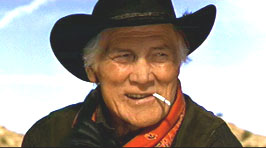
 All of my own presentation material will be on the open web via…a web page. Yes, I know it sounds old-fashioned, but I have found a number of old habits becoming new again. This includes saving everything I post online as plain text documents (including this post), keeping web pages and folders for most things that I do, and backing up the multimedia I make to my own hard drive.
 Sense my disgust? To me, these are all canned courses, made to last a long time and be consumable by anyone, but more importantly, taught by anyone. We continue to sojourn, often voluntarily and with enthusiam, into the Land with No Professor, as detailed elegantly by Alex Wright in his

